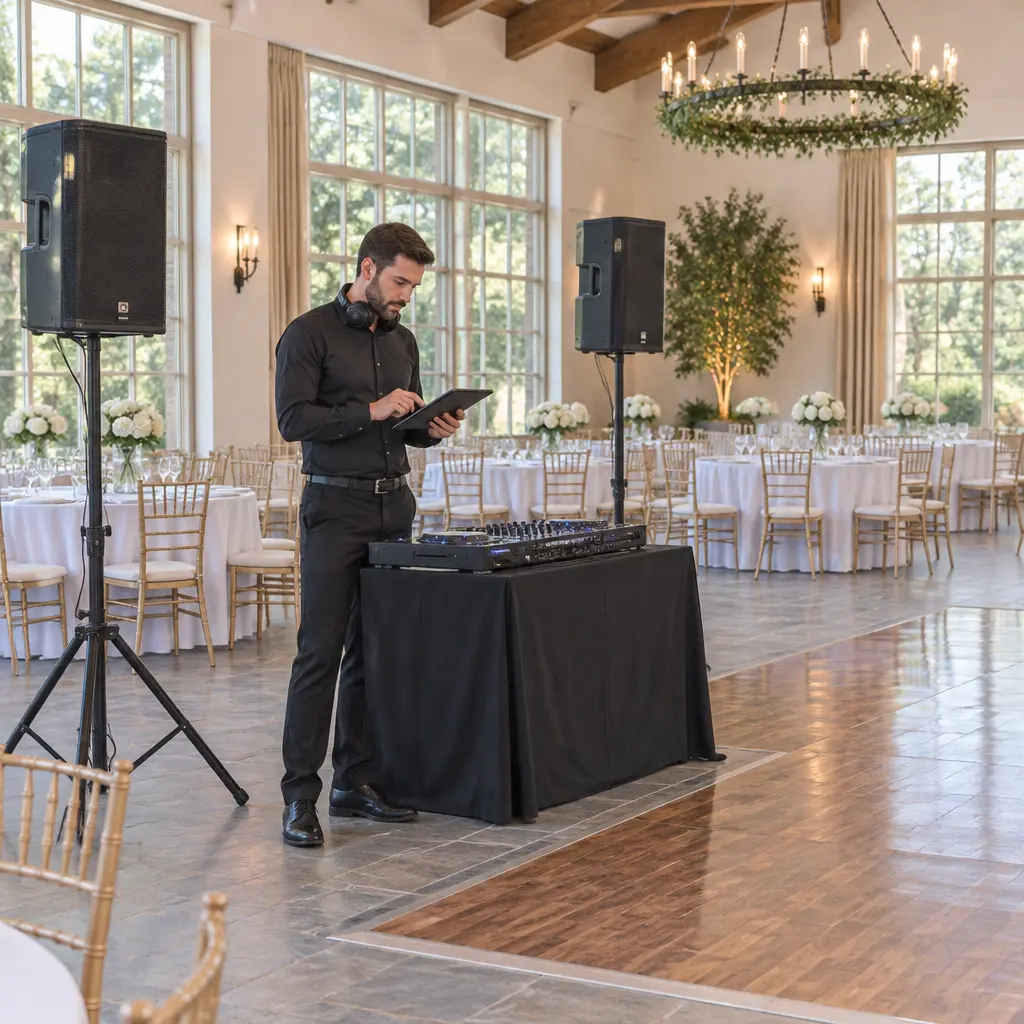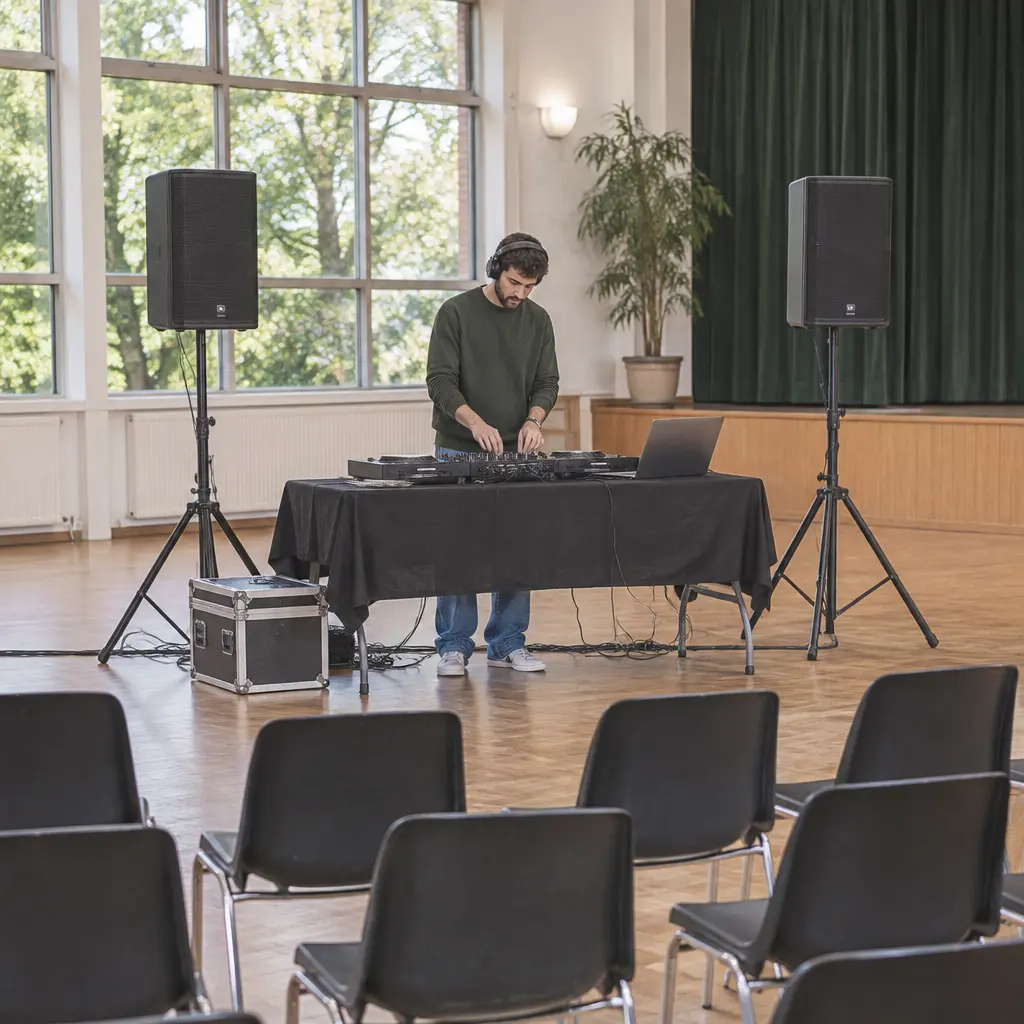
Beginner DJing is the practical skill of selecting, cueing, and smoothly transitioning recorded music for a live audience. You do not have to feel completely ready before taking a first gig: a short, well-prepared set at a low-pressure event can be a sensible next step once you can manage your equipment, recover from common mistakes, and keep music playing. The best route is to build core mixing skills, rehearse with realistic constraints, choose a beginner-friendly first booking, and prepare a backup plan. There is no reliable universal statistic for how many beginners feel unready or how many practice hours guarantee a successful debut, so readiness is better judged by observable skills than by a made-up threshold.
Beginner DJ readiness describes skills, not a feeling
For this article, “beginner DJ readiness” means having enough practical, musical, and logistical ability to deliver a planned set and respond calmly when something goes wrong. It is not a formal certification or a guarantee that every transition will be perfect. The National Careers Service describes DJ work as selecting and playing music for audiences and notes related tasks such as preparing tracks and using equipment. That broad job description helps explain why readiness involves more than learning to beatmatch.
A useful readiness test is whether you can perform the basics reliably, not whether you have eliminated nerves. A DJ may feel anxious yet be technically prepared; another may feel confident but lack a tested music library or a backup plan. Because a first gig is a real-world learning experience, choose a setting where the stakes, equipment demands, and audience expectations match your current ability.
Technical readiness: control the signal and the transition
Technical readiness is the ability to prepare tracks, cue the next song, manage levels, and make a transition without accidentally cutting the sound or creating an abrupt volume jump. Beginners can start with phrase matching and simple fades before adding beatmatching, EQ changes, loops, or effects. The aim is not to use every feature; it is to make deliberate choices and maintain a stable, listenable mix.
Before accepting a booking, practise the exact setup you expect to use. Learn how to connect the controller or mixer, select the correct audio output, use headphones for cueing, and restore sound if a track pauses. Test the master level and avoid redlining the meters: distortion can make a set harsh even when the music selection is strong. If the venue supplies unfamiliar gear, request the model in advance and practise on a similar layout where possible.
Musical readiness: prepare for people, not just a playlist
Musical readiness means having enough suitable tracks, knowing their energy and structure, and being able to adjust when the room responds differently than expected. A playlist is a useful starting point, but a DJ set also requires decisions about order, pacing, and when to change direction. Prepare more music than you expect to play, organize it in clearly named crates or folders, and tag tracks by mood, tempo, or event suitability.
Ask the organizer about the audience, event format, preferred genres, explicit-content rules, and any must-play or do-not-play requests. For a wedding, community event, or private party, the client’s expectations may matter more than the DJ’s personal taste. For a small bar or open-deck night, a narrower musical identity may be more appropriate. In either case, keep alternate tracks ready so you can respond without searching frantically.
Operational readiness: plan for the room and the failure points
Operational readiness covers arrival time, setup, communication, power and audio connections, and contingency planning. Confirm who provides the controller, mixer, speakers, cables, and microphone; who is responsible for sound checks; and when the set begins and ends. Carry essential adapters and a phone charger, and keep a second copy of your music library when practical. A backup device or playback option can reduce the impact of a laptop or software problem, but test it before the event rather than improvising during the set.
A simple written event plan is useful: venue contact, arrival time, equipment list, set duration, music restrictions, and the person to notify if a problem occurs. These details are especially important for newcomers because a preventable logistical surprise can create more stress than a minor mixing mistake.
Practice builds beginner DJ confidence through repeatable skills
Practice is structured repetition with feedback, not simply spending time playing songs. The American Psychological Association’s overview of deliberate practice emphasizes focused effort on specific tasks, feedback, and opportunities to improve. Applied to DJing, that means isolating a skill—such as setting a cue point or matching two phrases—rather than treating every practice session as an uninterrupted performance.
No authoritative source establishes a fixed number of practice hours that makes a beginner gig-ready. Instead, track observable results: Can you start and end a set cleanly? Can you recover from a missed cue? Can you maintain suitable sound levels and keep the music moving? A phone recording can reveal rushed transitions, long gaps, or abrupt changes that are hard to notice while mixing.
Rehearse short transitions before full-length sets
A transition is the process of moving from one track to another while managing timing, volume, and musical compatibility. Practise a small group of transitions repeatedly: align the incoming track, listen in headphones, bring it in gradually, adjust EQ if needed, and move the outgoing track down without losing the groove. Start with tracks that have compatible tempos and clear phrasing, then gradually introduce more challenging combinations.
After that, rehearse a complete set using a timer. Full-set practice tests your track order, energy changes, and ability to stay focused for the actual booking length. It also reveals whether your prepared library has enough variety. If you make a mistake, practise recovering without stopping the music; recovery is a core performance skill, not evidence that you have failed.
Use low-pressure practice performances
A low-pressure performance is a short set for a trusted audience or informal setting where the consequences of mistakes are limited. Examples include recording a mix for friends, playing at a small gathering with the host’s permission, or joining a beginner-friendly open-deck session. These opportunities help you practise setup, transitions, and listening while other people are present—conditions that solitary practice cannot fully reproduce.
Treat feedback as specific information. Ask a listener whether the volume stayed consistent, whether the music suited the occasion, and whether any transition felt distracting. Avoid relying only on general reactions such as “it was good,” which may be encouraging but do not identify what to improve.
Manage nerves with a practical routine
Performance nerves are a normal response to uncertainty and attention. A routine can reduce avoidable decisions: arrive early, check the connections, set a comfortable starting level, open the prepared music folders, and review the opening tracks. Plan a familiar first transition so that you can settle into the room before attempting anything technically ambitious.
Keep expectations realistic. A first gig is not a test of whether you deserve to be a DJ; it is one performance in which you can learn about equipment, audience response, and your own workflow. If anxiety is so intense that it prevents you from functioning, choose a smaller practice opportunity or discuss the booking with someone experienced rather than forcing yourself into a high-pressure event.
First DJ gigs should match a beginner’s experience
A beginner-friendly gig is a booking whose duration, audience expectations, technical setup, and consequences are manageable for the DJ’s current skill level. The first opportunity does not need to be a nightclub headline slot. A short opening set, a small private gathering, or a supervised community event can provide useful experience while leaving room to learn.
The Bureau of Labor Statistics classifies DJs within its broader “announcers and DJs” occupational group and describes work that can include introducing music and engaging audiences. That occupational context reinforces an important point: DJing involves communication and event responsibilities as well as music playback. A first booking is therefore a chance to practise professional habits, including confirming expectations and arriving prepared.
Choose a suitable first booking
A suitable first booking has clear expectations and a supportive organizer. Ask how long you will play, what audience will attend, whether you are opening or closing, what equipment is available, and whether there are genre or content requirements. An opening slot can be a sensible option when the organizer expects gradual energy-building rather than continuous peak-time intensity.
Before agreeing, be honest about your experience. You can say that you are developing as a DJ and ask whether a shorter set or a practice run is possible. Clear communication helps prevent a mismatch between what the organizer expects and what you can currently provide.
Agree on the brief and professional basics
A gig brief is a shared understanding of the music, schedule, equipment, and responsibilities. Confirm the booking in writing, including the set time, duration, payment if applicable, setup arrangements, and contact person. For private events, clarify requests and exclusions in advance. For public venues, ask about sound limits and the house system.
Be punctual, respect the venue’s sound rules, and avoid making promises about songs or technical features you cannot confidently deliver. If you are using music files, make sure your library is organized and that your playback setup works offline if the venue’s internet connection is unreliable. For commercial events, check that the organizer or venue has addressed applicable music licensing obligations in its jurisdiction.
Build a flexible set rather than a rigid sequence
A flexible set has a planned opening and several possible paths, rather than one fixed sequence that cannot adapt. Prepare groups of compatible tracks at different energy levels, along with a few reliable alternatives. This allows you to respond if the audience wants a different style or if a planned transition does not feel right in the room.
For example, a newcomer playing a one-hour birthday gathering might prepare a familiar opening, a main group of broadly suitable dance tracks, and a quieter selection for conversation or a change in mood. The exact choices depend on the host and audience; the useful lesson is to prepare options instead of assuming every crowd will react as expected.
A first-gig checklist turns preparation into action
A checklist reduces the number of decisions you must make under pressure. It also helps distinguish real readiness gaps from vague self-doubt. If the essential items are covered, a small amount of nervousness is not, by itself, a reason to cancel a suitable opportunity.
- Confirm the date, set length, arrival time, audience, musical brief, and event contact.
- Check the equipment plan, connections, headphones, power requirements, and sound-check arrangements.
- Prepare organized music folders, tested tracks, a flexible set outline, and a backup playback option if available.
- Rehearse the opening, several transitions, the ending, and a recovery plan for a missed cue or software issue.
- Pack essential cables and adapters, arrive early, and test the actual sound path before the audience arrives.
- After the gig, write down what worked, what felt difficult, and one specific skill to practise next.
A simple readiness chart can make this process visible: list technical control, music preparation, event communication, and backup planning as four categories, then mark each “ready,” “needs a check,” or “not yet.” This is a self-assessment tool, not a validated industry measurement, but it can turn an overwhelming question—“Am I ready?”—into a set of manageable actions.
Conclusion: take a first DJ gig that supports learning
Beginner DJ readiness is best judged by practical skills: controlling the equipment, preparing music for the audience, managing event details, and recovering from mistakes. Structured practice and low-pressure performances build confidence more reliably than waiting to feel completely fearless. A well-matched first gig—with clear expectations, a flexible set, and a tested backup plan—can be a valuable next step rather than a final exam.
Choose one specific skill to practise this week, record a short mix, and ask a trusted listener for focused feedback. Then look for a small, supportive opportunity that fits your current ability. Keep learning from each set, and let experience—not perfection—guide your progress.
Sources: National Careers Service, “DJ,” https://nationalcareers.service.gov.uk/job-profiles/dj; U.S. Bureau of Labor Statistics, Occupational Outlook Handbook, “Announcers,” https://www.bls.gov/ooh/media-and-communication/announcers.htm; American Psychological Association, “The Role of Deliberate Practice in the Acquisition of Expert Performance,” https://www.apa.org/ed/precollege/psn/2014/09/deliberate-practice.