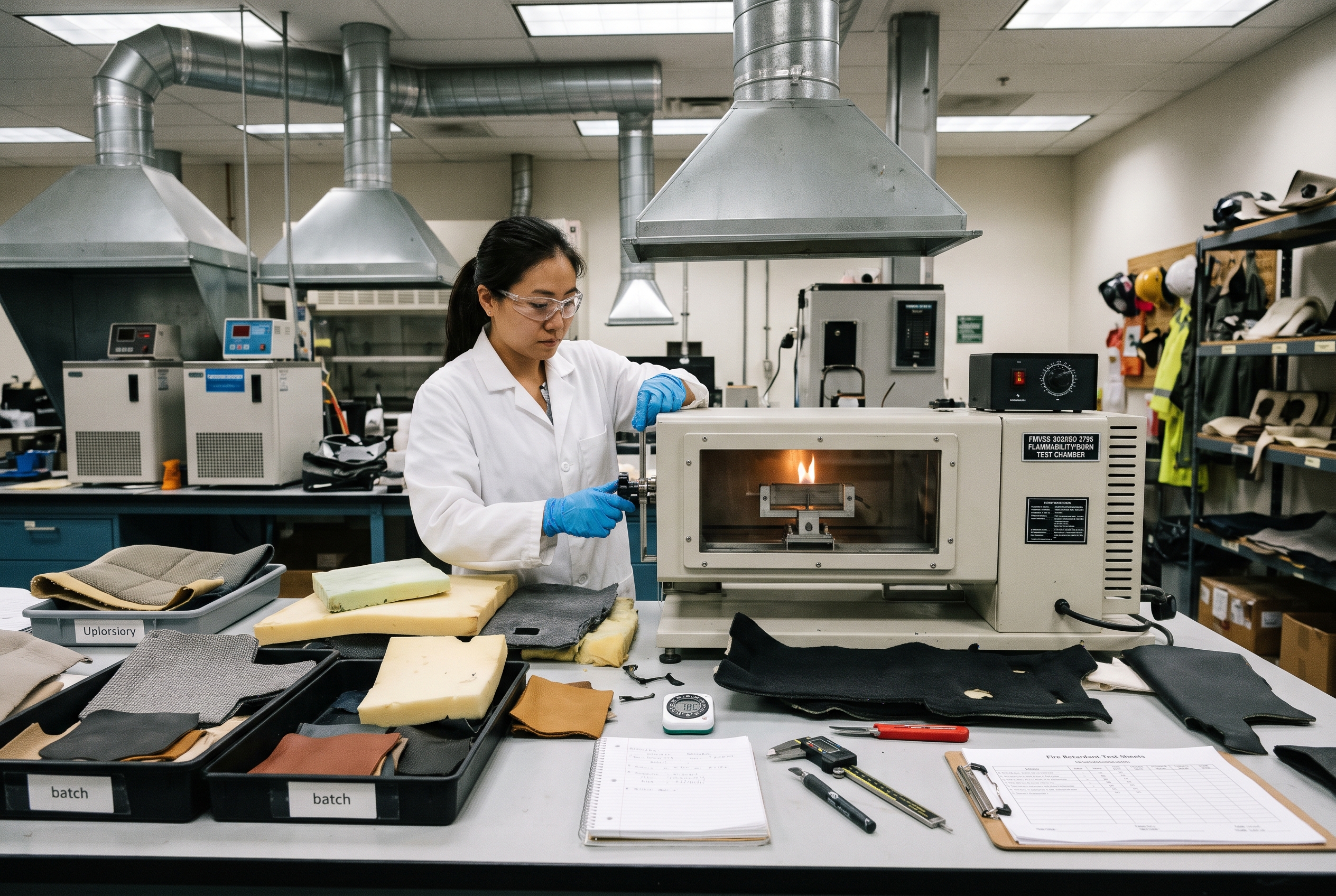
Every surface inside a modern vehicle cabin, from sculpted instrument panels and stitched seat bolsters to overhead airbags and carpeting, must endure years of direct human contact, intense solar heat, and strict fire safety mandates. Automotive testing encompasses the standardized physical, thermal, and chemical laboratory evaluations used to confirm that interior textiles, engineered plastics, foams, and bonding adhesives retain both their structural safety and aesthetic appeal over the full lifespan of a car. Without empirical verification prior to assembly, interior components can fade rapidly, emit hazardous flames during an electrical fault, or crack under daily cabin temperature swings.
Interior engineering balances comfort with stringent regulatory protection. Because occupants spend thousands of hours enclosed inside the passenger compartment, verifying mechanical wear resistance alongside critical fire retardancy transforms interior material selection into a measurable safety discipline.
Core Laboratory Evaluations for Cabin Materials and Trim
Qualifying interior components requires targeted laboratory simulations designed to replicate accelerated occupant wear, radiant heat buildup, and emergency fire scenarios.
- Flammability and Burn Rate Compliance: Standardized horizontal burn chambers built around regulations such as FMVSS 302 and ISO 3795 measure how rapidly ignition flames travel across seat upholstery, polyurethane cushions, headliners, and acoustic felt. Passing these strict burn speed ceilings buys crucial escape time in the event of a cabin fire.
- Abrasion, Scratch, and Chemical Rub Resistance: Automated Martindale abrasion rigs, Crockmeter color transfer testers, and precision five finger scratch apparatuses simulate years of clothing friction, keys, fingernails, and repeated contact with lotions, sweat, and interior cleaning sprays. These evaluations ensure dashboard grains, door armrests, and coated leathers resist peeling, gloss shifts, and premature scuffing.
- Thermal Aging and Seam Integrity Verification: Parked vehicles in sunny climates routinely exceed extreme interior temperatures that weaken trim adhesives and brittle plastic fasteners. Controlled oven heat soaking and cold chamber conditioning verify that laminated door panels do not delaminate and that hidden airbag deployment seams tear cleanly across every climate extreme.
Vehicle Segments Requiring Rigorous Interior Qualification
Accredited cabin material testing supports safety compliance and perceived craftsmanship across diverse mobility sectors.
- Passenger Cars and Sport Utility Vehicles: Mainstream and luxury automakers rely on strict colorfastness, tactile durability, and airbag cover deployment validation to preserve showroom quality and protect warranty margins over years of family commuting.
- Electric and Autonomous Mobility Cabins: Panoramic glass roofs and quiet electric drivetrains introduce heightened solar loads and louder perceived trim squeaks. Testing lightweight recycled fabrics, bio based leathers, and acoustic damping trims guarantees both comfort and long term thermal stability.
- Public Transit Buses and Commercial Coaches: High occupancy transit fleets experience relentless daily boarding and heavy sanitization routines. Validating ultra durable seat textiles, slip resistant flooring, and stringent flame retardant wall panels directly protects public passenger safety.
- Heavy Commercial and Agricultural Operator Cabs: Tractor, mining, and freight operators interact continuously with switchgear, grab handles, and vinyl seating while exposed to grease, agricultural dust, and ultraviolet rays. Confirming chemical resistance and structural seam strength keeps heavy work cabins functional under punishing conditions.
Delivering durable, compliant vehicle interiors demands verifiable proof before trim tooling moves into full scale production. By scheduling accredited automotive testing through an Alstesting Laboratory Testing service in Malaysia, regional interior tier suppliers and vehicle assemblers gain dependable, third party analytical certification to meet global safety benchmarks across Southeast Asia.
Frequently Asked Questions (FAQ)
Why is horizontal burn rate testing mandatory for car interior textiles?
Horizontal flammability testing measures the exact speed at which a flame spreads across an interior material after brief exposure to a standardized gas burner. Enforcing strict maximum burn velocity thresholds ensures that seat foams, carpets, and fabric liners self extinguish or burn slowly enough to prevent rapid cabin flashover during an electrical short or collision.
How do laboratories evaluate scratch resistance on textured dashboard plastics?
Technicians typically use a five finger scratch tester fitted with weighted tungsten carbide tips of specified diameters that glide across the molded plastic surface at controlled forces. Analysts then inspect the panels under standardized lighting and color spectrophotometers to measure whitening, groove depth, and visible gloss contrast against automaker acceptance limits.
What causes interior trim adhesives to peel in hot tropical climates?
Sustained solar radiation heats dark dashboard skins and roof headliners far above ambient outdoor air temperatures, softening thermoplastic adhesives and accelerating chemical plasticizer migration from underlying vinyl or foam layers. Laboratory heat aging combined with peel strength testing exposes weak adhesive formulations before components reach tropical vehicle markets.