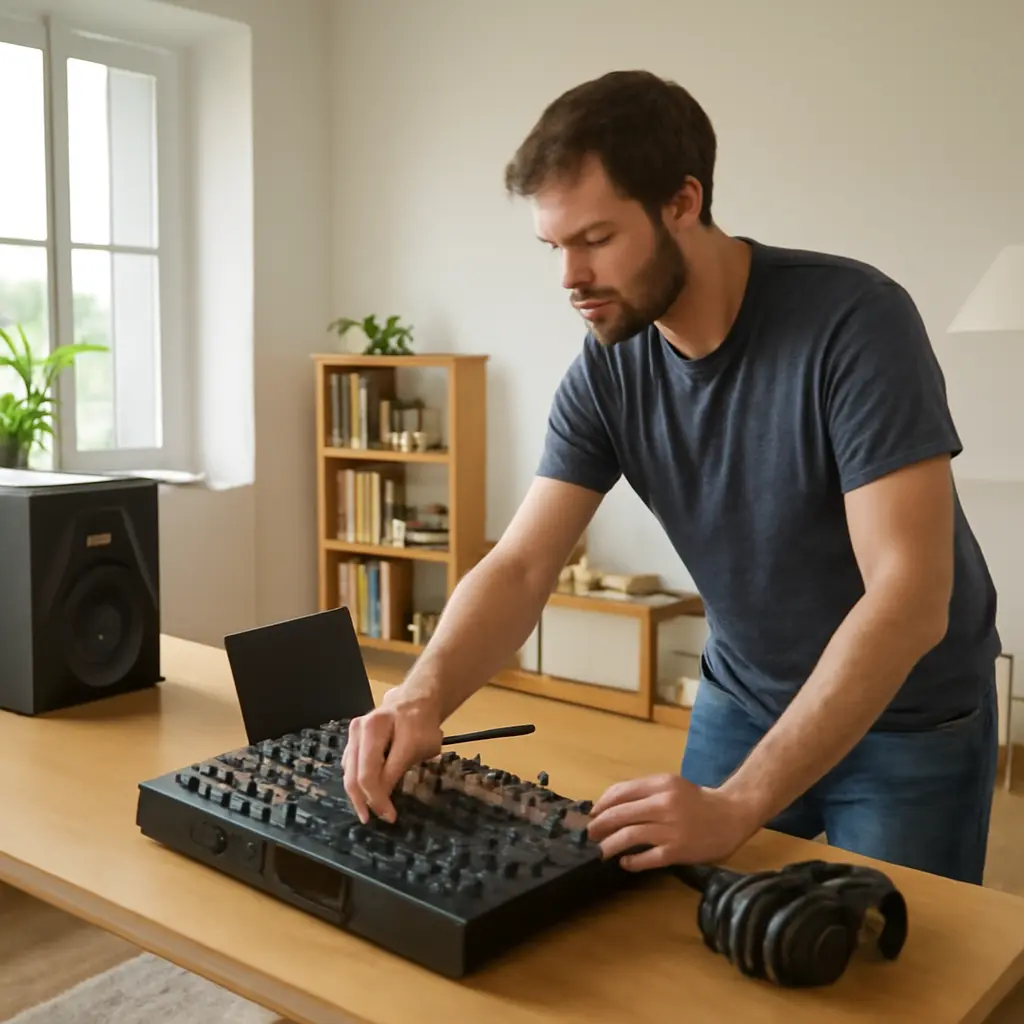
A professional mix release is more than uploading a finished track: it is a planned sequence of previews, context, platform choices, and follow-up that helps listeners understand what they are hearing and gives them reasons to return. For DJs and mix creators, audience retention depends on pairing a clear release identity with a dependable cadence, rights-aware distribution, and useful audience feedback. The scale of the opportunity is substantial: the International Federation of the Phonographic Industry reported that global recorded-music revenues reached US$29.6 billion in 2024, while streaming accounted for 69.0% of those revenues. Those figures describe the recorded-music market, not DJ mixes specifically, but they help explain why discoverability and release strategy matter.
Professional mix releases: audience-retention strategy
A professional mix release is a deliberately packaged DJ set, radio show, live recording, or continuous audio program published for an identifiable audience. There is no universal release formula, and “retention” can mean repeat listening, follows, saves, comments, or continued attention across a series. A practical approach treats the mix as both a listening experience and an ongoing relationship: give each installment a recognizable promise, make it easy to sample and find, and use audience signals to improve the next one.
The process below covers the release identity, mix and rights preparation, staged promotion, distribution, and measurement. It also distinguishes reliable platform guidance and market data from tactics that should be tested against a creator’s own audience.
Release identity and audience promise
Release identity is the combination of a series name, musical or editorial premise, visual presentation, and publishing rhythm that helps listeners recognize why a mix is worth their time. It is not a guarantee of audience growth. It is a consistent frame that reduces uncertainty: a listener should be able to tell whether a mix is, for example, a deep-house warm-up, a monthly local-scene showcase, or a high-energy live recording.
The idea connects to positioning in marketing: define a specific listener and a clear benefit, then deliver on that promise repeatedly. YouTube’s Creator Academy advises creators to build a consistent schedule and communicate it to their audience; consistency is a useful operational principle, not a promise that any particular frequency will improve recommendations.
Series format and musical niche
A series format is a repeatable structure such as a monthly guest mix, a genre-focused episode, a recorded club set, or a short themed selection. Naming the format and describing its musical territory helps listeners decide whether to follow. Useful descriptions identify the mood, setting, or listening use—such as a 45-minute commute mix—without claiming that a broad genre label alone will make the release discoverable.
For example, a local DJ might publish “Room Two” as a recurring series featuring regional selectors. Each episode can vary in artist and sound while preserving the series’ editorial promise. This is a practical case pattern, not a claim about a named campaign’s measured results: the consistent frame helps returning listeners recognize the installment, while guest identities introduce new points of interest.
Cadence and expectation
Cadence is the interval between releases. Choose one the creator can sustain at the quality level the format requires; a monthly schedule is more valuable than an ambitious weekly plan that repeatedly slips. Announce the next date only when it is realistic, and explain changes plainly. A stable schedule creates an expectation, while a dependable standard of sound and curation gives listeners a reason to keep that expectation.
There is no industry-wide statistic proving that weekly, fortnightly, or monthly DJ mixes retain audiences best. Creators should compare their own episode-level plays, completion indicators where available, follows, and returning listeners rather than treating a generic posting rule as evidence.
Mix preparation, metadata, and rights
Mix preparation covers the audio master, track information, artwork, description, and permissions needed for a release to be understandable and usable on its chosen platform. These details are part of the listener experience: clear audio avoids needless friction, while accurate credits make the mix easier to discuss and help listeners find the artists featured.
Rights are especially important because a continuous mix usually contains recordings made by other people. Platform rules and licensing arrangements differ by service, territory, and use. A successful upload is not proof that every right has been cleared; platforms may identify, monetize, mute, block, or remove material under their policies.
Audio master and quality control
A release master is the final audio file prepared for upload. Check the complete mix on headphones, speakers, and a mobile device; listen for abrupt level changes, clipping, unintended silence, and transitions that fail outside the production setup. Export to the platform’s accepted format and keep an uncompressed archival master. Loudness normalization varies by service, so avoid assuming that making a file extremely loud will make it sound better after upload.
The International Telecommunication Union’s Recommendation ITU-R BS.1770 specifies algorithms for measuring programme loudness and true-peak audio level. It is a technical measurement standard, not a universal target for every mix platform. The relevant lesson is to use dependable meters and listen critically, then follow the destination service’s current delivery guidance.
Tracklists and contextual metadata
Metadata is descriptive information attached to a release, including the title, creator, episode number, date, artwork, tracklist, featured artists, and recording context. A timestamped tracklist is particularly useful for long mixes: listeners can identify a track, revisit a section, and share a specific moment. If a tracklist is incomplete or subject to change, label it as provisional rather than presenting uncertain credits as confirmed.
A concise description can also explain where the mix was recorded, whether it is a studio selection or live set, and what listeners can expect from the episode. These details give a release context beyond a genre tag and make later cataloguing easier for both the creator and the audience.
Copyright, platform rules, and licensing
Copyright is the legal framework governing protected creative works and recordings. A DJ mix may involve rights in the musical composition and in the sound recording; permission to use one does not automatically establish permission to use the other. The U.S. Copyright Office explains that these are distinct works. Rules vary internationally, so creators should not assume that a platform’s upload tool or a track’s availability for streaming grants permission to include it in a redistributed mix.
Before publishing, review the platform’s current music policies and determine whether the intended use is covered by applicable licenses or direct permissions. SoundCloud’s help materials, for example, explain that copyright-protected material can be subject to automated identification and rights-holder actions. Keep records of permissions and use cleared, commissioned, or appropriately licensed material when the release requires greater control.
Promotion without audience fatigue
Promotion without fatigue means communicating a release through a small number of useful, coordinated messages rather than repeating the same sales pitch everywhere. The audience receives a reason to pay attention at each stage: a preview, the full mix, and a later piece of context or follow-up. The aim is not to maximize the number of posts, but to make each message relevant and easy to act on.
Pew Research Center’s 2024 social-media fact sheet reports that YouTube is used by 83% of U.S. adults, while Instagram is used by 47%. These figures describe U.S. adults’ use of platforms, not music listeners’ preferred discovery routes and not the expected reach of an individual post. They support a cautious principle: choose channels based on where a creator’s actual audience is, rather than trying to maintain every platform equally.
Preview, release, and follow-up sequence
A release sequence is a simple plan for what to share before, on, and after publication. A workable version might include one short teaser with the date, one release-day post with a direct listening destination, and one later post featuring a track, guest, or story from the session. Each item should add information or entertainment; avoid presenting a stream of near-identical reminders as if each were a new announcement.
- Before release, share a short excerpt or the episode’s premise and state the publication date.
- On release day, publish the full mix with a clear title, track information, and one primary listening link.
- After release, spotlight a moment, answer a listener question, or thank a featured artist and direct interested people to the complete episode.
This sequence is a practical framework, not a statistically proven optimum. Creators can test whether their audience responds better to a track ID, a spoken introduction, a visual clip, or a short written note, while keeping the number of messages manageable.
Audience participation and community
Audience participation gives listeners a low-friction way to contribute, such as asking for a track ID, inviting a question for a guest, or requesting themes for a future episode. Questions should be specific and optional. A creator can then respond in the comments, include a listener suggestion in a later installment, or explain why a request does not fit the series.
Participation is most useful when it strengthens the format rather than handing editorial control to a popularity contest. Credit contributors appropriately, obtain permission before using a listener’s recording or artwork, and keep moderation standards clear. Community activity is a relationship signal; it should not be confused with proof that every participant listened to the entire mix.
Channel and format choices
A distribution channel is the service or outlet where listeners encounter the mix. A creator may use a dedicated audio platform for the full program, a video platform for a visual edition, and social channels for short previews. Avoid fragmenting the audience across too many destinations: identify one primary home, then use other channels to guide listeners there or provide a genuinely platform-specific experience.
A chart could compare each channel by plays, average listening duration, follows, comments, and referrals to the next episode. Such a chart should be built from the creator’s own analytics; public platform popularity statistics cannot show which channel will work best for a particular mix series.
Measurement, learning, and repeat listening
Measurement is the process of using release and audience data to decide what to keep, change, or stop. No single metric fully represents audience retention. A play count measures starts or reported plays according to a platform’s method, while completion, average listening time, saves, comments, and return visits answer different questions. Definitions and data access vary by service.
The bridge from measurement to retention is iteration: identify where listeners respond, make one reasonable adjustment, and see whether the next release improves. Compare like with like—similar formats, durations, promotional effort, and release windows—and avoid attributing an outcome to a change when several things changed at once.
Useful metrics and their limits
- Starts or plays: indicate initial reach under the platform’s counting rules, but may not show meaningful listening.
- Average listening time or completion: can reveal whether a mix sustains attention, where such analytics are available; compare episodes of similar length.
- Follows, saves, and repeat plays: suggest future interest, but do not guarantee that a listener will return.
- Comments and track requests: offer qualitative feedback and community signals, though a small group of active commenters may not represent all listeners.
- Referral clicks: help show whether a preview or announcement sent people to the full release.
YouTube’s official Analytics guidance describes audience-retention reporting as a way to see which parts of a video held viewers’ attention and where they left. That feature is relevant to video-hosted mixes, but its availability and interpretation depend on the channel and content. For audio-first platforms, use the analytics actually supplied rather than assuming the same measurements exist everywhere.
A repeatable review cycle
A review cycle turns analytics into manageable editorial decisions. After each release, record the format, duration, date, promotional posts, plays, available retention measures, and notable audience comments. Then choose one change for the next installment—such as improving the opening, adding timestamps, adjusting the description, or changing the preview excerpt. Keeping a simple log reduces reliance on memory and makes comparisons more honest.
For example, if listeners consistently leave during a long spoken introduction, test a shorter opening in the next comparable episode. If the data instead show strong completion but few follows, make the series identity or next-release invitation clearer. These are diagnostic hypotheses, not universal explanations; validate them with repeated releases before making a major change.
Conclusion: make every mix part of a relationship
Professional mix releases retain attention through a recognizable release identity, dependable cadence, careful audio and metadata preparation, rights-aware distribution, and promotion that offers value rather than repetition. The recorded-music market’s scale and the widespread use of major social platforms show why discoverability matters, but neither market-wide revenue nor general platform use predicts the performance of an individual DJ mix.
Start with a series promise you can sustain, publish accurate track information, check the permissions and rules relevant to your release, and use the analytics available on your chosen platform to guide one improvement at a time. For further reading, consult the IFPI’s Global Music Report, the U.S. Copyright Office’s copyright guidance, and the current creator and rights documentation for the services where you publish.
Sources: International Federation of the Phonographic Industry, Global Music Report 2025, https://www.ifpi.org/ifpi-global-music-report-global-recorded-music-revenues-grew-4-8-in-2024/; YouTube Creator Academy, Upload schedule tips, https://support.google.com/youtube/answer/13616979; International Telecommunication Union, Recommendation ITU-R BS.1770, https://www.itu.int/rec/R-REC-BS.1770/en; U.S. Copyright Office, Copyright Basics, https://www.copyright.gov/circs/circ01.pdf; SoundCloud, Copyright and content identification, https://help.soundcloud.com/hc/en-us/articles/115003564308-Copyright-and-content-identification; Pew Research Center, Americans’ Social Media Use, 2024, https://www.pewresearch.org/internet/2024/01/31/americans-social-media-use/; YouTube Help, Measure key moments for audience retention, https://support.google.com/youtube/answer/9314415