
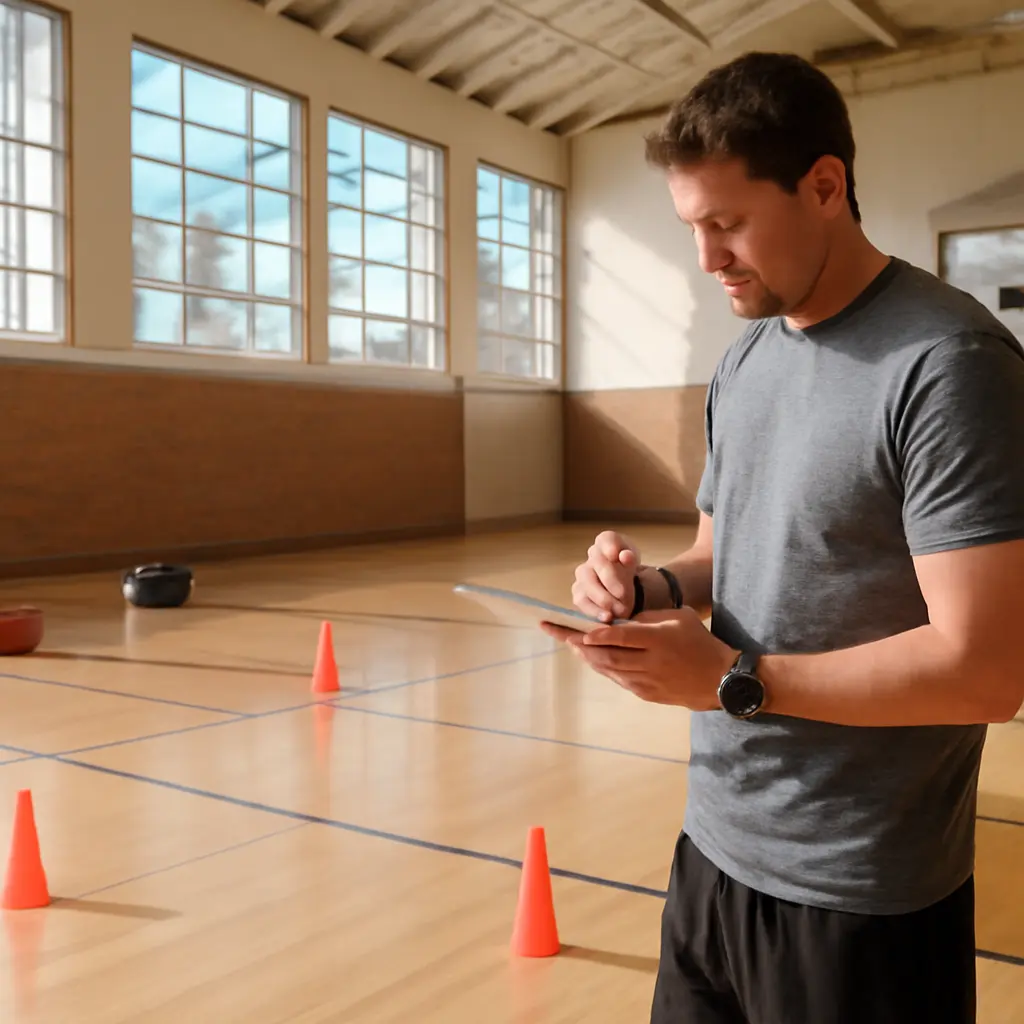
A professional practice session is the structured work an experienced performer does to improve, maintain, and prepare their skills—not simply a long run-through of a finished routine. Beginners often see the polished performance but not the repetition, deliberate feedback, recovery, and problem-solving behind it. Research on deliberate practice, motor learning, and athletic training helps explain why professionals divide work into focused tasks, monitor progress, and manage fatigue. These principles apply across sports, music, and other performance fields, although the details differ by discipline.
Professional Practice Structure: How Experts Organize a Session
Practice structure is the way a performer arranges preparation, focused skill work, rehearsal, and review. Psychologist K. Anders Ericsson and colleagues described deliberate practice as effortful activity designed to improve performance, typically involving specific goals, concentration, feedback, and opportunities to correct errors. It is not synonymous with simply accumulating hours: the quality and purpose of practice matter.
A professional session may include a warm-up, technical drills, work on difficult sections, full-performance runs, and a short review. These are related forms of practice, not a universal formula. A tennis player might isolate a serve; a pianist might slow down a difficult passage; an actor might work on timing or vocal delivery. In each case, the task is selected to address a particular need.
Preparation and Warm-Up
A warm-up is a gradual transition into demanding work. It can prepare the body, voice, or attention for the session while giving the performer a chance to notice stiffness, fatigue, or other limitations. In sport, the National Strength and Conditioning Association describes warm-up as a preparatory process that can include general movement and activity-specific actions. Musicians and actors also use progressive exercises, though the methods vary by instrument, role, and individual need. Warm-ups should prepare performers rather than exhaust them.
Focused Drills and Deliberate Practice
A focused drill isolates one skill or recurring problem so that the performer can work on it with attention and feedback. This is one practical form of deliberate practice. Ericsson, Ralf Krampe, and Clemens Tesch-Römer’s influential 1993 paper examined expert performance and emphasized structured, effortful practice with clear improvement goals. The paper is often cited in discussions of expertise, but it does not establish that a single number of practice hours guarantees mastery; progress also depends on the field, the learner, instruction, and other conditions.
For example, rather than repeatedly playing an entire piece, a musician may isolate a phrase that consistently breaks down. A basketball player may practice a specific shot from a particular location. The aim is to make the target of attention small enough to diagnose and adjust, then check whether the improvement holds when the skill is performed in a wider context.
Rehearsal and Full-Performance Runs
Rehearsal connects individual skills into a sequence or complete performance. It reveals problems that isolated drills may not: transitions, pacing, concentration under pressure, and the ability to recover after a mistake. Professionals may run a section at performance tempo, simulate competition conditions, or perform a complete routine. These runs are useful, but repeating a whole performance without a specific purpose can make it harder to identify what needs work.
Professional Feedback: How Experts Find and Correct Errors
Feedback is information about the quality or outcome of an action, used to guide a later attempt. It may come from a coach, teacher, conductor, video recording, timing device, or the performer’s own sensations. Its value depends on whether it helps answer a practical question: what happened, what needs to change, and how will the next attempt test that change?
Feedback includes external feedback, such as a coach’s observation, and intrinsic feedback, such as a performer noticing balance or sound quality. A professional often alternates between trying a skill, checking evidence, and adjusting. This connects technical practice to review: once performers can identify errors more accurately, they can spend less time repeating attempts that do not address the problem.
Coaching, Video, and Performance Data
External feedback can make subtle errors easier to see. A coach might identify a change in movement, while video can help an athlete or performer compare attempts. In sport, timing and tracking tools may record speed, distance, or workload; in music, a metronome or recording can help assess tempo and consistency. Such measures are useful when they match the goal, but a number cannot explain every aspect of performance. Context and expert interpretation still matter.
A practical example is reviewing a recorded tennis serve to compare toss placement and body position across attempts. The recording offers evidence, while coaching helps interpret which adjustment is likely to help. In a music session, a recording may reveal a tempo fluctuation the performer did not notice while playing.
Error Correction and Practice Variation
Error correction is the process of identifying a gap between the intended and actual result and changing the next attempt accordingly. Not every miss requires a major adjustment: performers need to distinguish a meaningful pattern from ordinary variation. Practice can also vary the order or conditions of tasks. In a 2006 review, researchers Robert A. Bjork and Elizabeth L. Bjork discussed “desirable difficulties”—challenges that can make learning feel less fluent in the moment while supporting stronger retention or transfer in some circumstances. The effect depends on the learner and task, so variation should be purposeful rather than random.
Professional Recovery: Why Rest Is Part of Practice
Recovery is the time and set of behaviors that allow a performer to manage fatigue and prepare for subsequent work. It is not the opposite of training; it helps make sustained training possible. The American College of Sports Medicine’s guidance on exercise emphasizes that training should be planned in relation to an individual’s capacity and recovery. In other performance fields, voice, hands, attention, and emotional energy may also require breaks and careful workload management.
Breaks, Fatigue, and Session Quality
A break is a pause that helps prevent a session from becoming unproductive as concentration or physical capacity declines. Professionals may change tasks, take a short rest, or stop when fatigue makes accurate work difficult. There is no single break schedule that fits every performer. The relevant signal is whether the quality of attention and execution is falling, especially when the task is physically repetitive or technically demanding.
This matters because simply extending a session can increase repetition without improving the skill. A performer who notices deteriorating control may choose a lower-intensity task, review notes, or finish for the day. In sport, training plans also account for workload and injury risk; in music, musicians may adjust practice to limit strain and seek qualified help for persistent pain.
Sleep and Learning
Sleep supports health and may contribute to memory and skill consolidation. The U.S. Centers for Disease Control and Prevention recommends that adults aged 18–60 get at least seven hours of sleep per night. That public-health recommendation is not a guarantee of better performance for every individual, but it underscores why practice plans should not treat sleep as optional time that can always be replaced with additional drills.
Professional Progress Tracking: How Experts Judge Improvement
Progress tracking is the systematic recording or review of practice goals and results. It helps distinguish a productive session from one that merely felt busy. A log can note the skill worked on, the task conditions, relevant feedback, and the next adjustment. The appropriate measure depends on the activity: accuracy, consistency, tempo, stamina, or the ability to perform under pressure may all be relevant.
Goals, Practice Logs, and Self-Assessment
A practice goal describes what the performer intends to improve or test. Specific goals—such as maintaining a steady tempo through a passage or improving serve placement—are easier to evaluate than a vague instruction to “get better.” A log makes patterns visible over time, while self-assessment helps the performer compare intention with outcome. Goals should remain flexible: if the evidence shows fatigue or a new technical issue, the session plan may need to change.
Transfer from Practice to Performance
Transfer is the ability to use a learned skill in a different setting or under performance conditions. A technique that works during a quiet drill may be harder to execute in a competition, audition, or live show. Professionals therefore test skills in conditions that increasingly resemble the real task, while maintaining a safe and manageable progression. This links practice design with rehearsal: isolated improvement matters most when it carries into the complete performance.
Conclusion: What Beginners Can Learn from a Pro’s Practice Session
A professional practice session is more than repetition. Its structure combines preparation, focused drills, rehearsal, feedback, recovery, and progress tracking. Deliberate practice gives work a clear improvement target; feedback helps diagnose errors; rest supports sustainable effort; and review checks whether skills transfer to performance. The details differ across sports, music, and other disciplines, so there is no universal session plan or guaranteed number of hours that produces expertise.
Beginners can apply these principles by choosing one specific goal, practicing it attentively, using a useful source of feedback, taking breaks when work quality declines, and recording what to address next time. For further reading, consult Ericsson and colleagues on deliberate practice, the Bjorks on learning and desirable difficulties, and qualified coaches or teachers who understand the demands of the relevant field.
Sources: K. Anders Ericsson, Ralf T. Krampe, and Clemens Tesch-Römer, “The Role of Deliberate Practice in the Acquisition of Expert Performance,” Psychological Review, 1993, https://doi.org/10.1037/0033-295X.100.3.363; Robert A. Bjork and Elizabeth L. Bjork, “Optimizing Treatment and Instruction: Implications of a New Theory of Disuse,” in Memory and Society: Psychological Perspectives, 2006, https://bjorklab.psych.ucla.edu/research/; National Strength and Conditioning Association, “Warm-Up and Flexibility,” https://www.nsca.com/education/articles/kinetic-select/warm-up-and-flexibility/; American College of Sports Medicine, “ACSM’s Guidelines for Exercise Testing and Prescription,” https://www.acsm.org/education-resources/books/guidelines-exercise-testing-prescription; U.S. Centers for Disease Control and Prevention, “About Sleep,” https://www.cdc.gov/sleep/about/index.html.

